Building the city, building a life: how the Kigali UFI is harnessing local talent
In Kigali, in the neighbourhoods of Rwezamenyo and Nyakabanda, the Urban Incubator has facilitated the installation of water kiosks in public spaces. This project addresses the issue of access to drinking water for residents of these two neighbourhoods in the Nyarugenge district. Designed and built in line with the UFI’s participatory approach, the facilities combine meeting a basic need with improving the everyday living environment. As well as addressing this need for water, the project also provided an opportunity to build local skills through training schemes involving local craftspeople and workers from the neighbourhood.
The Nyakabanda kiosk: a new haven of peace and security
In Kigali, in the neighbourhoods of Rwezamenyo and Nyakabanda, the Urban Fabric Initiatives has facilitated the installation of water kiosks in public spaces. This project addresses the issue of access to drinking water for residents of these two neighbourhoods in the Nyarugenge district. Designed and built in line with the Urban Nurseries’ participatory approach, the facilities combine meeting a basic need with improving the everyday living environment. As well as addressing this need for water, the project also provided an opportunity to build local skills through training schemes involving local craftspeople and workers from the neighbourhood.
From rubbish tip to community space: the transformation of two Nairobi neighbourhoods, as told by Denis and Gibson
In Kayole Soweto and Kahawa Soweto, two of Nairobi’s most densely populated informal settlements, neglected public spaces are being transformed into vibrant community hubs thanks to the Urban Incubator (UFI Nairobi). Located on the eastern and northern outskirts of the Kenyan capital, these two areas share similar structural challenges: high population density, land insecurity, poor waste management, and a chronic lack of basic public infrastructure and safe gathering spaces.
“Today, it’s a space for everyone”
In the heart of the Andraiosoro neighbourhood, a poorly maintained basketball court, mainly used by men, has been transformed as part of the ‘Pépinières urbaines’ programme. Before the work began, the site was rather unwelcoming.
Thanks to a co-design approach that closely involved local residents – particularly women – it has become a well-organised and inclusive public space. This transformation has profoundly changed the ways in which the space is used – and, in particular, the role of women within it.
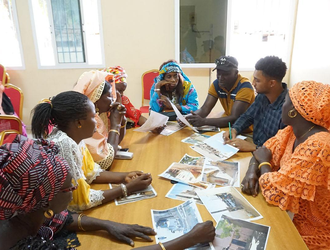
Urban Fabric Initiative: when residents take part in shaping the city
How can we build a city that truly reflects the people who live there? This is the question that the Urban Fabric Initiative (UFI) – brought together under a programme of activities known as PAPU – are seeking to answer as they experiment with a different way of shaping the city.