“Today, it’s a space for everyone”
In the heart of the Andraiosoro neighbourhood, a poorly maintained basketball court, mainly used by men, has been transformed as part of the ‘Pépinières urbaines’ programme. Before the work began, the site was rather unwelcoming.
Thanks to a co-design approach that closely involved local residents – particularly women – it has become a well-organised and inclusive public space. This transformation has profoundly changed the ways in which the space is used – and, in particular, the role of women within it.
To understand the key factors behind this transformation, two local figures share their experiences of the project: Léa Vololonirina RANOROHANTA, a leader within the Women’s Association of the Assemblies of God Church (ADD), and Narintra RAKOTOSOLO, head of the women’s section of the AT2B basketball club (Andraisoro Tia BasketBall). Both reflect on how they became involved in the PUA project and how local women have reclaimed this site to turn it into a vibrant, inclusive and unifying community space.
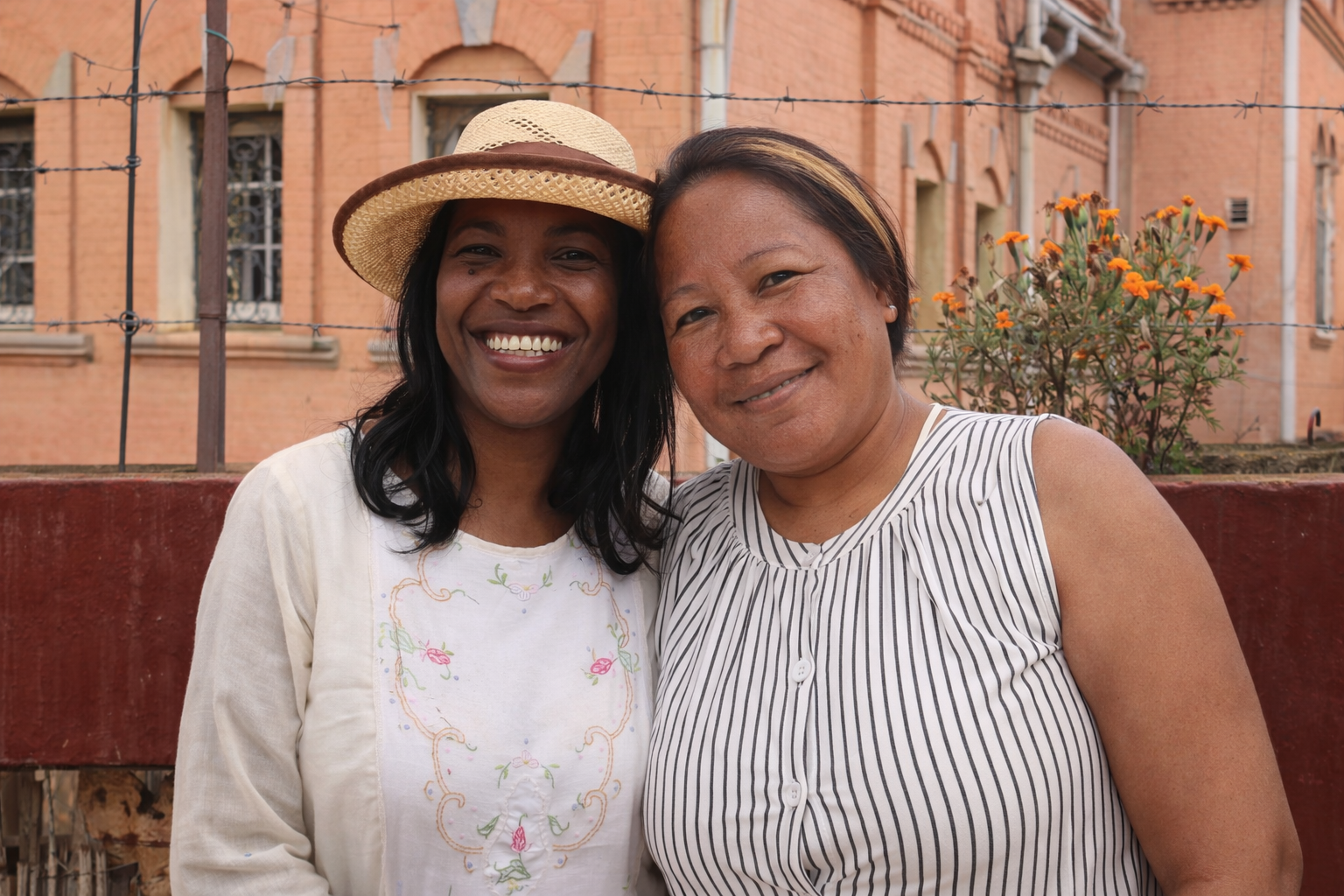
“There were no shadows; everything was in a mess and in a state of disrepair. Only men went there and played. It was intimidating. I didn’t even know that, as a woman, I was allowed to use that site.”
Léa, leader of the ADD church’s women’s association, recalls. Narindra, head of a basketball club, makes the same observation:
“There were no activities for us women. No seating, no shade. We didn’t dare come because there were so many men on the pitch.”
Inclusive co-design and sustainable management
The site is now run by a community management committee comprising the AT2B association, representatives of the fokontany (neighbourhood) and the Urban Municipality of Antananarivo.
Narindra, a member of AT2B – a long-standing stakeholder in the site – was brought on board as a focal point and is now responsible for the site. Léa, recognised as one of the neighbourhood’s committed activists, joined the initiative following a call for proposals for community activities, which her association won. Both were invited by the GRET teams to take part in the co-design workshops right from the project’s launch.
“We were involved right from the start, when the venue was being planned. Our main request was to make the place more family-friendly, with seating areas, particularly for older women. We felt that our views were taken on board.” explains Léa.
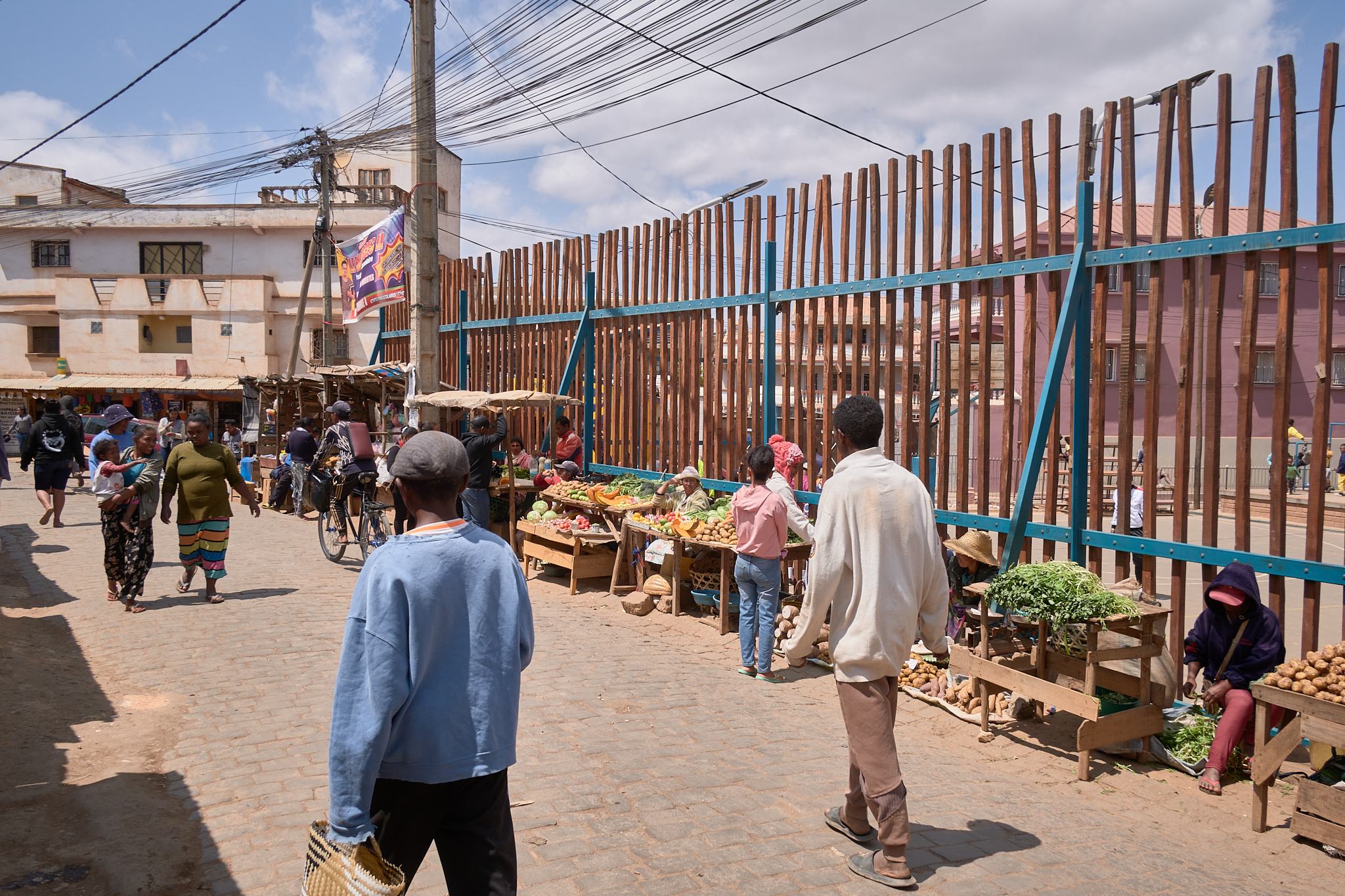
Narindra, who is also a member of the community management committee, emphasises the importance of certain practical improvements:
“Installing a ball-catcher has helped to reduce disputes with local businesses around the pitch. Before, balls were constantly going out of bounds, which caused tension.”
A vibrant, shared space
Today, the site is organised around a programme of activities run by the committee.
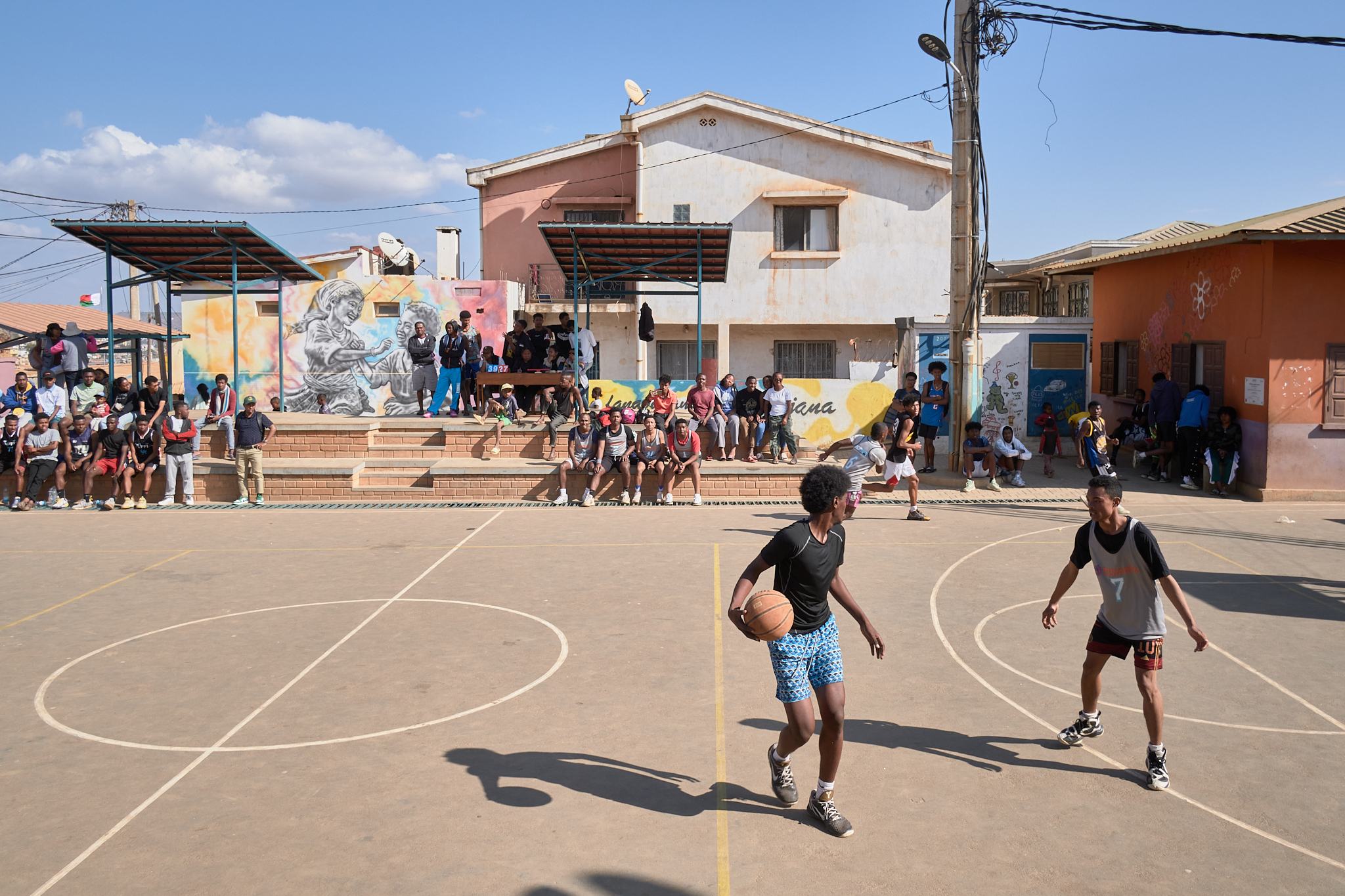
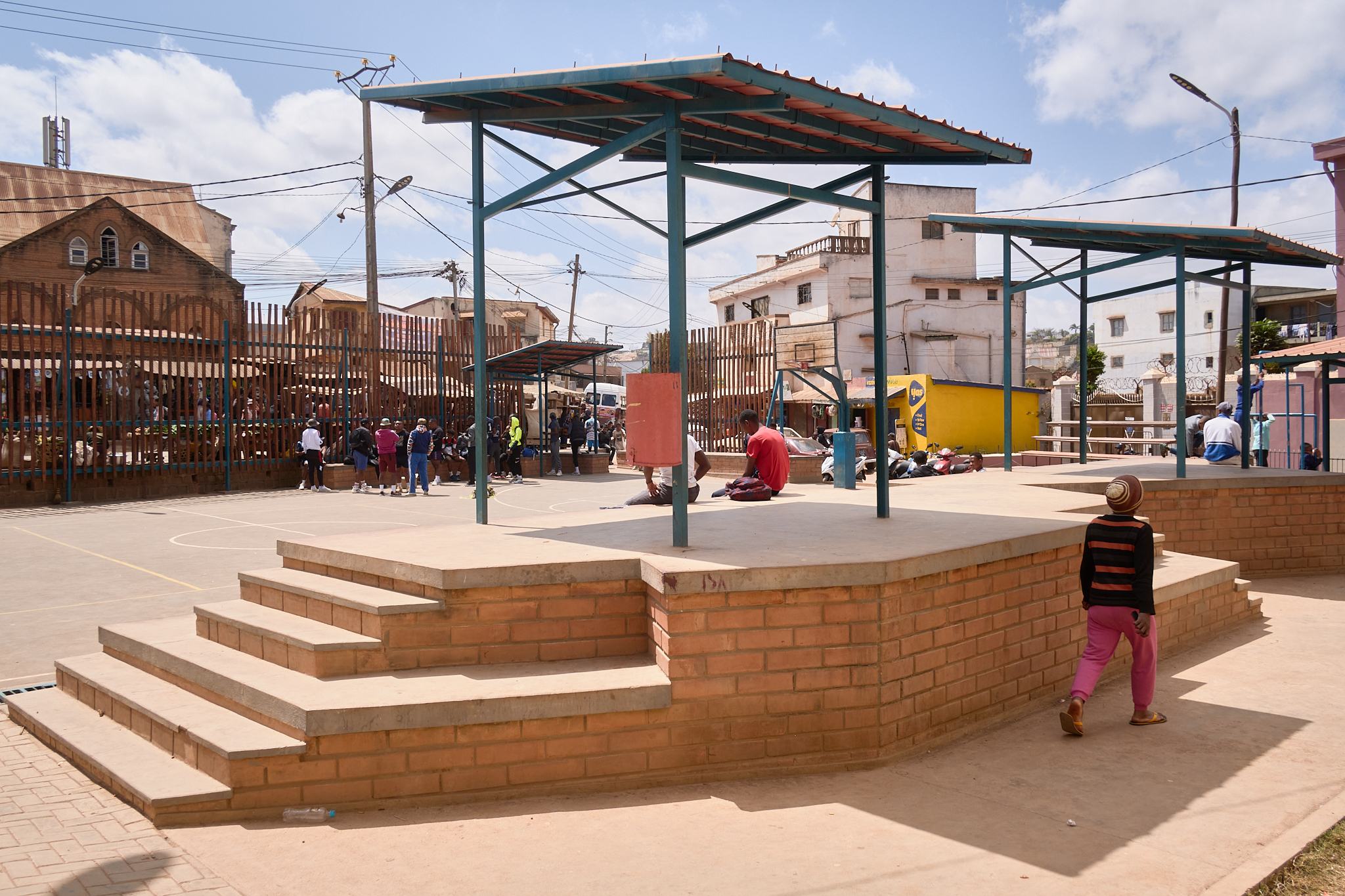
Now equipped with versatile, shaded seating areas featuring board games embedded in the concrete, the site has become a vibrant, shared space, where patterns of use – and in particular the number of women visiting the site – have changed significantly.
Basketball, football, volleyball, Katro and Fanorona (traditional Malagasy games), fairs and entertainment: the site has become a vibrant space, frequented by adult women, young girls, children and even elderly women.
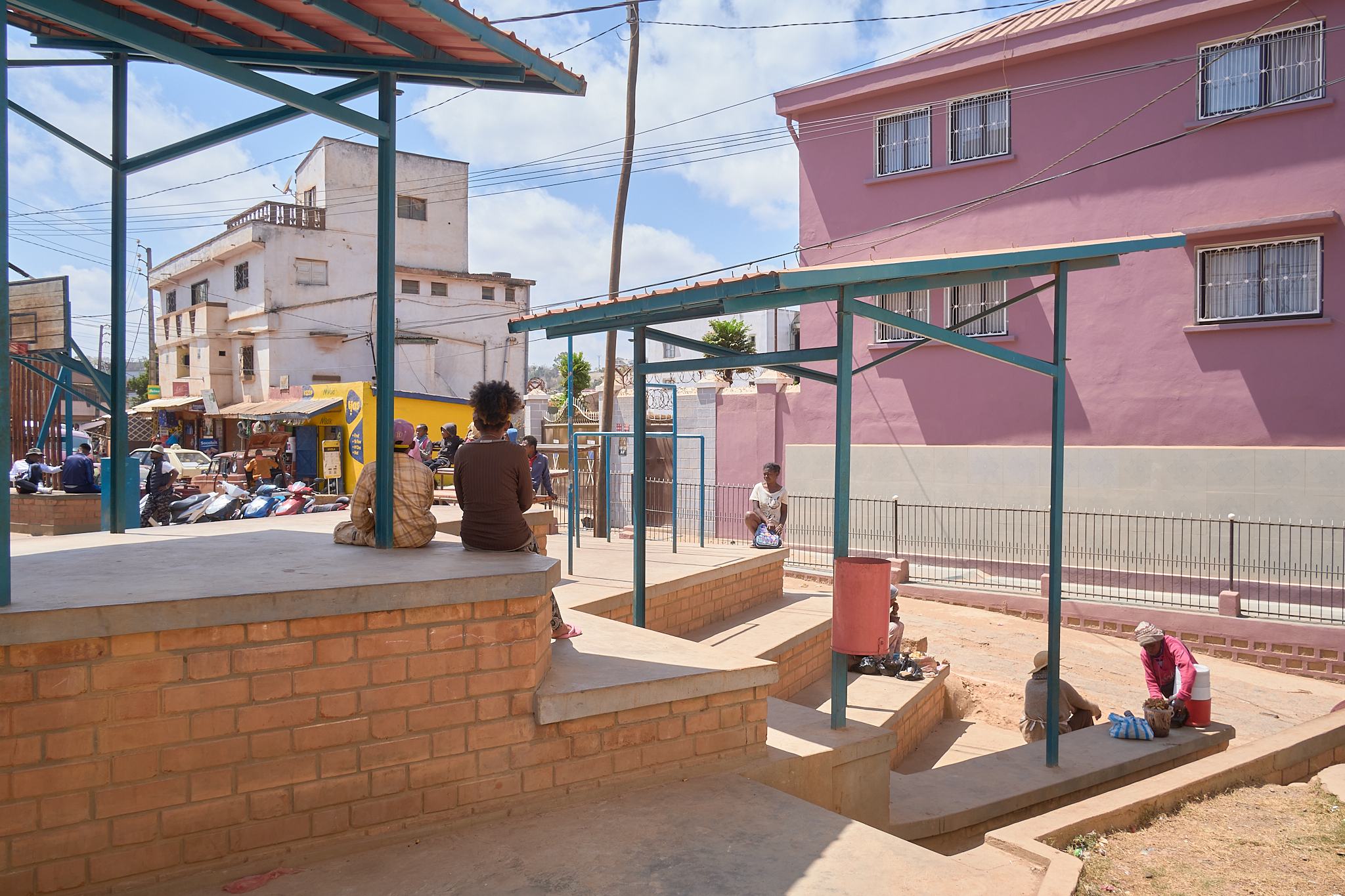
“I feel at peace here,” says Narintra. “It’s a relaxing place.”
“Everything is now harmonious and organised,” adds Léa. “We feel at ease here.”
Both women come here regularly: Léa for the community activities, and Narintra almost every day to coach the young basketball players and look after the venue.
Whilst there is still room for improvement, the consensus is clear: the installation of toilet facilities and a water point to improve comfort and hygiene, particularly after sporting activities. In Andraiosoro, the development has not only transformed a piece of land: it has created a public space for women, giving them a say in the project right from the design stage.