Building the city, building a life: how the Kigali UFI is harnessing local talent
In Kigali, in the neighbourhoods of Rwezamenyo and Nyakabanda, the Urban Incubator has facilitated the installation of water kiosks in public spaces. This project addresses the issue of access to drinking water for residents of these two neighbourhoods in the Nyarugenge district. Designed and built in line with the UFI’s participatory approach, the facilities combine meeting a basic need with improving the everyday living environment. As well as addressing this need for water, the project also provided an opportunity to build local skills through training schemes involving local craftspeople and workers from the neighbourhood.
“The project has given me stability and new skills” Jean Claude Aboubakar Ngabonziza, aged 30, bricklayer – Nyakabanda
Jean Claude Aboubakar Ngabonziza is a bricklayer and lives in the Nyakabanda area, in the town of Gasiza, north-east of Kigali. He had been working in the construction industry for five years when he heard about the water kiosk project from the village leaders, who were encouraging local residents to apply for the jobs on offer as part of the development of the Kigali UFI.
Recruited right at the start of the project, Aboubakar joined the team when the foundations were being laid. He went on to help build the Nyakabanda water kiosk, as well as the other kiosks in the project, right through to their completion.
For him, this opportunity meant more than just a temporary job:
“The project has given me stability. Those who demonstrated their skills were able to work from start to finish on the building sites. This has enabled us not only to earn money, but also to gain more experience.”
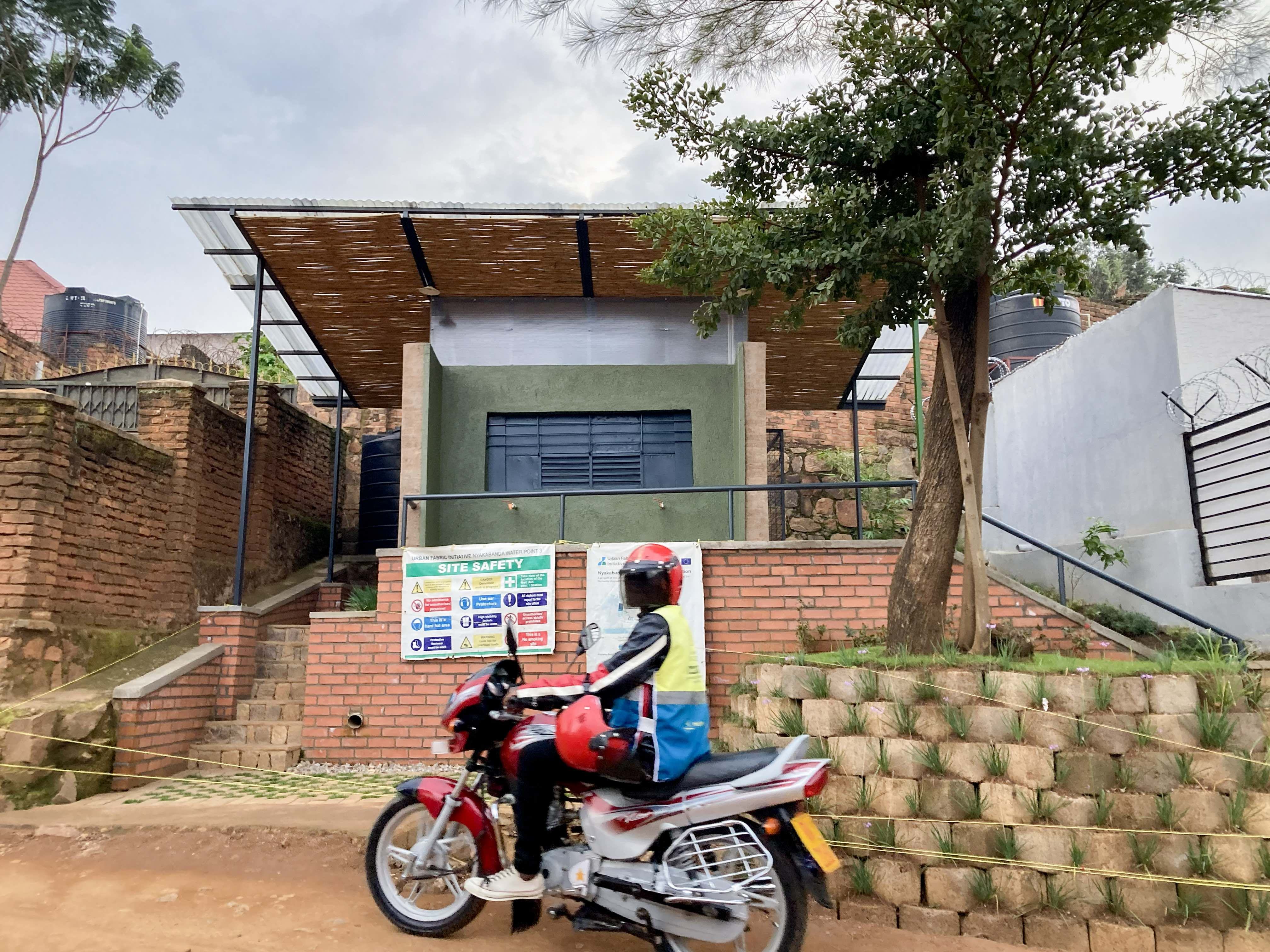
Accustomed to working with brick and stone, Aboubakar discovered a new technique on the construction site of the Nyakabanda water kiosk: mortar wash, a render that protects the bricks whilst leaving them exposed.
“It was a new technique for me. I learnt how to use it and I think it’s a good way of protecting exposed bricks. I’d recommend it and use it elsewhere, or even at home if I ever build my own house.”
As well as developing his technical skills, the project has enabled him to build on his professional experience. Shortly after the work was completed, he secured a new contract in Nyamirambo, on a multi-storey commercial building site, where he is currently working.
He also emphasises the importance of the project’s local roots:
“The local authorities encouraged local residents to apply for jobs in the construction sector. This enabled the community living near the kiosks to benefit directly from the project.”
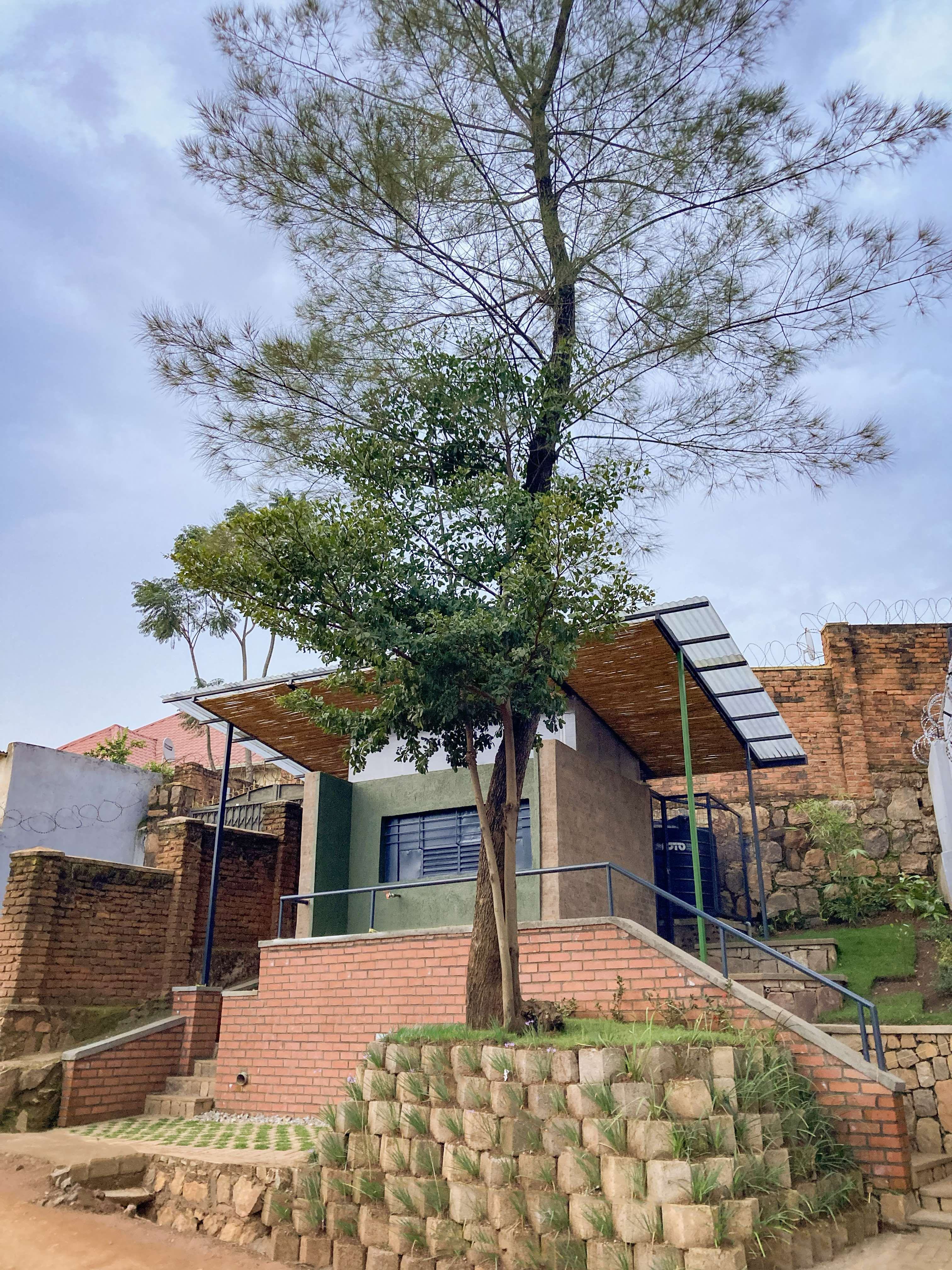
Even today, he lives near one of the water kiosks; he continues to use it every day and is a living testament to a development that has not only transformed the area, but also supported the career paths of those who helped to build it.
Construction, achieved by engaging and building the capacity of the local workforce, is a key element of the UFI: by drawing on local talent, the project injects part of its budget into the local economy; the workforce, which will remain in place after the project ends, learns new skills; and the involvement of local residents in the construction process helps to foster a greater sense of ownership and better long-term management of the facilities.
Pour plus apprendre sur la démarche « Pépinière urbaine » rendez-vous sur le site https://pepinieres-urbaines.org/fr/