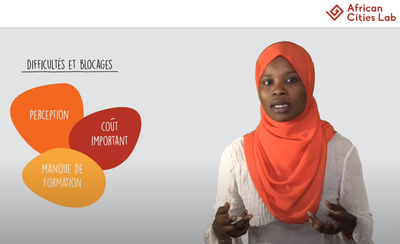
Use of recycled materials by Adame Ndour
In this video, Adame Ndour, a geotechnical engineer specialising in earth constructions, presents an example of a project with an environmental approach, through the experience of the Pépinière Urbaine de Dakar.
Urban public spaces in Africa, as in other parts of the world, have a dual nature: formal and informal. They are used in a variety of ways, often diverted from their official functions, as informal sports grounds, meeting places or venues for cultural events. However, due to their lack of official regulation, these spaces are often the scene of complex negotiations and exacerbate social inequalities. Despite this, they remain strategic places for strengthening social cohesion, offering opportunities for co-construction with users to meet the diverse needs of the population. This co-production approach to public spaces, from design to management, offers a way of meeting the expectations of today's residents while ensuring the sustainability of actions for the cities of tomorrow.
MOOC Collective Urban Factory - Supporting multi-stakeholder collaborations, inspiring new ways of making cities The online course "The collective urban factory" explores the potential and challenges of urban co-production. Using concrete examples, the MOOC looks at the possible relationships between public and private action, formal and informal, at every decision-making stage, from the design to the management of the urban environment. Aiming to explore new collaborative ways of doing things, it is made up of five modules, aimed at all urban practitioners and technicians wishing to open up to new methods and approaches to social and institutional intermediation.